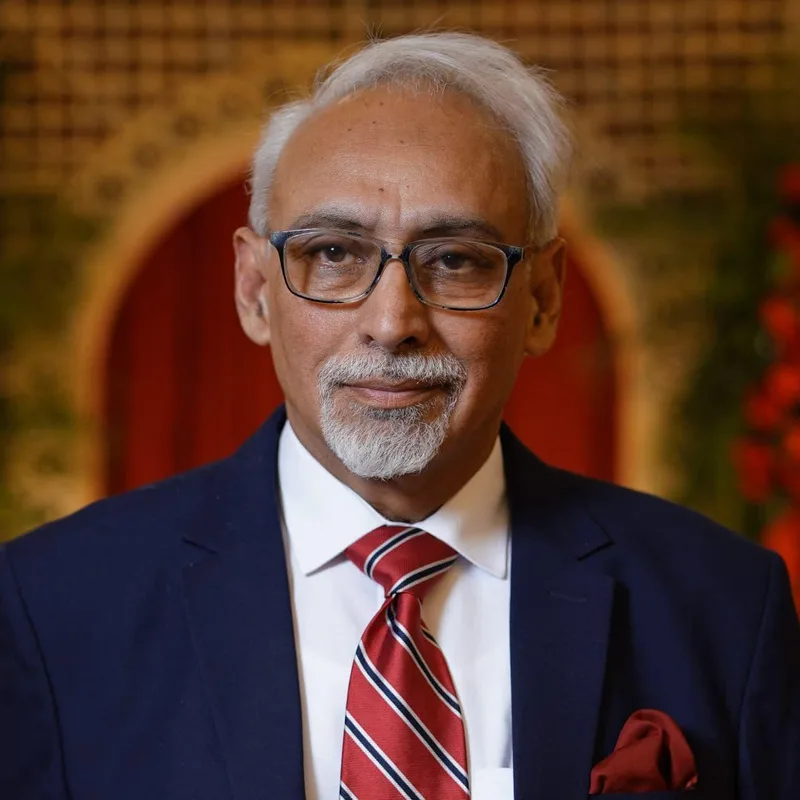
Advocate, Supreme Court of Pakistan · Lahore, Pakistan
Advocate of the Supreme Court of Pakistan and the Lahore High Court, former Assistant Advocate General Punjab and Assistant Attorney General for Pakistan, and adjunct professor of law in Lahore.
Akhtar Aly Kureshy has practised law in Pakistan since 1992, when he enrolled as an advocate of the Lahore High Court and joined the chamber of Barrister Ijaz Husain Batalvi. He was enrolled as an advocate of the Supreme Court of Pakistan in 2005.
He has served the state as a law officer, as Assistant Advocate General for Punjab and as Assistant Attorney General for Pakistan, and earlier as legal advisor to the Provincial Assembly of the Punjab. His practice covers constitutional, administrative, criminal, banking and corporate law.
Since 2007 he has taught law as an adjunct professor at Superior Law College, Lahore. He writes on justice, the courts and the Constitution for Pakistan Today, Profit and The News.
At Legal By Country he writes the Pakistan guides and is their legal reviewer and consultant. He checks every guide against the statute, the provincial rules and how the law is applied in practice, and signs it off before it is published.
This profile explains who writes and reviews our guides. It is not an advertisement for legal services, and Legal By Country does not arrange consultations or refer cases.
No. Section 6C of the Prevention of Cruelty to Animals Act, 1890 bans inciting or baiting animals to fight, and Khyber Pakhtunkhwa's Animal Welfare Act, 2024 bans fighting ventures. Betting on fights adds gambling charges carrying up to five years in Punjab.
Yes. The NADRA Ordinance, 2000 requires you to register and apply for a CNIC within 90 days of turning 18, but no law we found makes carrying it at all times compulsory. Flights, SIMs, banks and hotels still need it.
Yes, if the scheme is approved and the file genuine, but a file is only a contract with the developer. Section 54 of the Transfer of Property Act, 1882 requires a registered deed for ownership. Lahore banned file trading in LDA schemes in July 2026.
No. A landlord can only evict through the Rent Tribunal in Punjab or the Rent Controller in Sindh, Islamabad and KP. Changing locks or removing belongings can be a crime under the Illegal Dispossession Act, 2005, punishable with up to ten years.
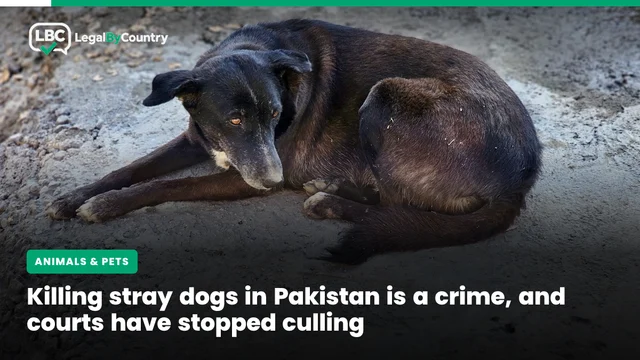
No. Shooting, poisoning or beating a stray dog can be charged under sections 428 and 429 of the Pakistan Penal Code and provincial cruelty laws. High Courts have stopped municipal culling in Punjab and Islamabad, and only vets may euthanise rabid or incurable dogs.
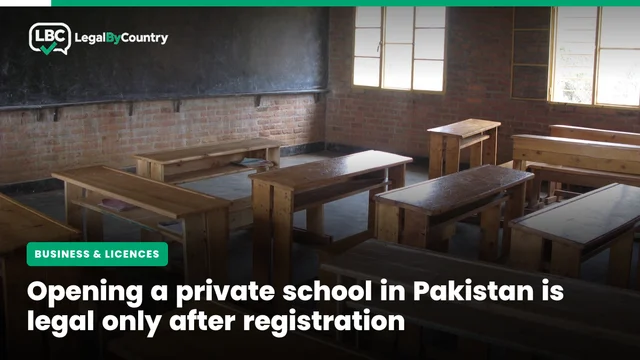
No. A private school must be registered before it opens. Punjab's 1984 Ordinance, Islamabad's 2013 PEIRA Act, Sindh's 2001 Ordinance and the KP and Balochistan Acts all require it, and Punjab fines an unregistered school Rs300,000 to Rs4 million.
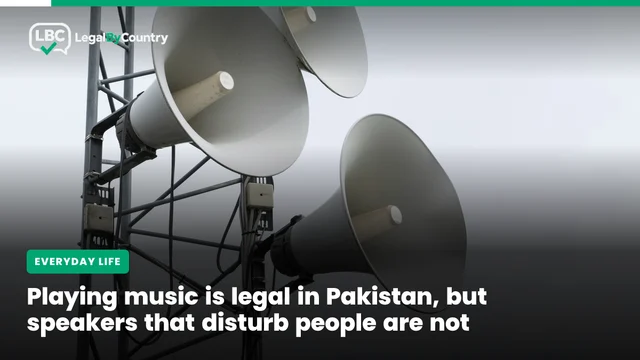
Playing music is legal, but not through speakers loud enough to annoy or disturb others. Punjab's Sound Systems (Regulation) Act 2015 punishes this with up to six months in jail and a Rs 25,000 to Rs 100,000 fine. Other provinces have similar laws.
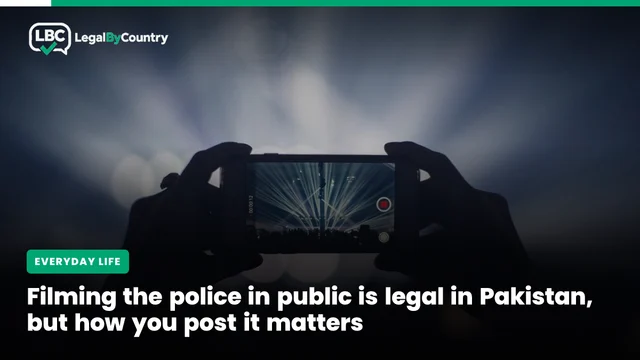
Yes, in a public place. No Pakistani law bans filming police on duty. You can still be charged for obstruction under section 186 of the Penal Code, for filming prohibited places, or under PECA for posting a false or harmful clip.
Mostly yes for small home tutoring, no for an unapproved academy. Development authority land use rules, such as section 38 of the LDA Act, 1975, bar converting a house without approval, and Islamabad, Khyber Pakhtunkhwa and now Punjab require tuition centres to register.
Mostly yes, on Eid ul Adha and the two days after. Punjab's Animals Slaughter Control Act, 1963 and Balochistan's 2025 Act exempt qurbani from the slaughterhouse rule, but blocking roads, dumping offal or breaking a local Eid order can still bring fines.
Yes. Rs 100, Rs 200, Rs 750 and Rs 1,500 bearer bonds and registered Premium Prize Bonds remain valid. The Rs 7,500, Rs 15,000, Rs 25,000 and Rs 40,000 bearer bonds were withdrawn, and the last date to encash them was 31 December 2024.
Not in the full legal sense for Muslims. Pakistan has no adoption statute, but a family court can appoint you a child's guardian under the Guardians and Wards Act, 1890. The child keeps their birth lineage and does not inherit automatically.
Yes. Asking for alms in a public place is an offence under each province's vagrancy law, with up to three years in Punjab. Organising or forcing others to beg is far more serious, and since 2025 can count as human trafficking.
Yes. Hurting or threatening a family member is a crime under the Pakistan Penal Code everywhere. Islamabad, Sindh, Punjab, Khyber Pakhtunkhwa and Balochistan also have domestic violence laws giving survivors protection orders, and Islamabad, Sindh and KP punish some abuse directly.
No. A non-custom-paid car is smuggled goods under the Customs Act, 1969, so it can be seized and confiscated. Malakand and the merged districts tolerate local use of profiled cars, but no amnesty is open as of November 2026.
No, not for Muslims obliged to fast. Section 3 of the Ehtram-e-Ramazan Ordinance, 1981 bans them from eating, drinking or smoking in public during fasting hours. Non-Muslims and people Islam excuses are outside it. Penalty: up to three months and a fine.
Yes. No Pakistani law limits how much cash you keep at home. But filers must declare it in their wealth statement under section 116 of the Income Tax Ordinance, 2001, and cash you cannot explain can be taxed as income under section 111.
No. Section 11 of the Transplantation of Human Organs and Tissues Act, 2010 and each provincial version punish anyone who pays or is paid for an organ with up to ten years in prison and a fine. Only unpaid donation to relatives is allowed.
Only genuine direct selling is legal. Section 301 of the Companies Act, 2017 and the SECP's 2026 regulations treat MLM that pays mainly for recruitment, pyramid schemes and Ponzi schemes as unlawful, and the promoters can face winding up, penalties and cheating charges.
No, not yet. As of November 2026, Starlink has no PTA licence and only a provisional PSARB registration. Using an imported kit can be an offence under section 31 of the Telecom Act, 1996, carrying up to three years or Rs 10 million.
Yes. Under the Family Courts Act, 1964 a Family Court can dissolve a marriage by khula once reconciliation fails, even if the husband refuses. The Supreme Court has upheld this since 1967, though the wife usually returns some or all of the dower.
Only within fixed limits. Under rule 7A of the Baggage Rules, 2006 and FERA 1947, adults may take USD 5,000 per trip and USD 30,000 a year, minors half that, plus Rs 10,000. All foreign currency must be declared at departure.
Yes, but restricted. The Dowry and Bridal Gifts (Restriction) Act, 1976 caps dowry at Rs 5,000 and makes every article the bride's own property. Punjab bans displaying dowry, and Khyber Pakhtunkhwa punishes anyone on the groom's side who demands it.
Only with listed countries. Section 14(3) of the Pakistan Citizenship Act, 1951 allows dual nationality with 22 countries on the DGIP list, including the UK, USA and Canada. For any other country, section 14(1) ends your Pakistani citizenship unless you renounce the other.
Yes, but only with a provincial hunting licence or permit, during the notified season and for listed game species. Protected animals, national parks and sanctuaries are off limits under every provincial wildlife Act, and Punjab now jails illegal hunters for up to seven years.
No. In every city and development authority area you need an approved building plan before construction starts. The LDA Act 1975, Sindh Buildings Control Ordinance 1979 and CDA Ordinance 1960 allow fines, prison, sealing and demolition at the owner's cost.
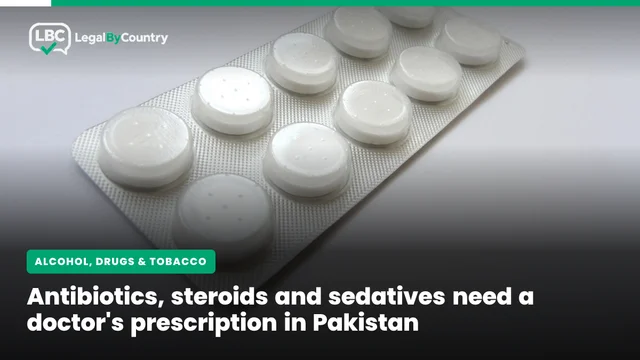
Only for ordinary medicines. The Drugs Act, 1976 and provincial drug rules let licensed shops sell prescription-only medicines, such as antibiotics, steroids and sedatives, only on a doctor's prescription. Buying psychotropic medicines without one can also breach narcotics law.
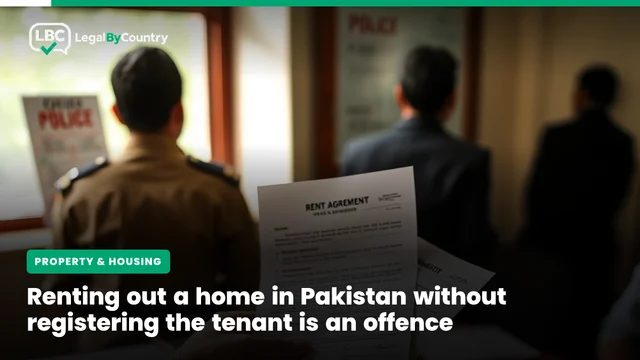
No. Every province requires landlords to report tenants to the police: within 15 days in Punjab and 48 hours in Sindh under their Temporary Residents Acts 2015, and within 7 days in KP. Breaking it can mean arrest and up to a year in prison.
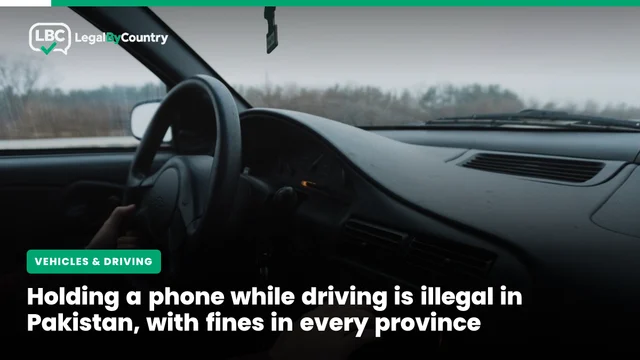
No, not with the phone in your hand. Section 101-A of the Provincial Motor Vehicles Ordinance 1965 bans driving while using a hand-held phone, except to call emergency services. Fines run from Rs 500 on motorways to Rs 15,000 for Punjab buses.
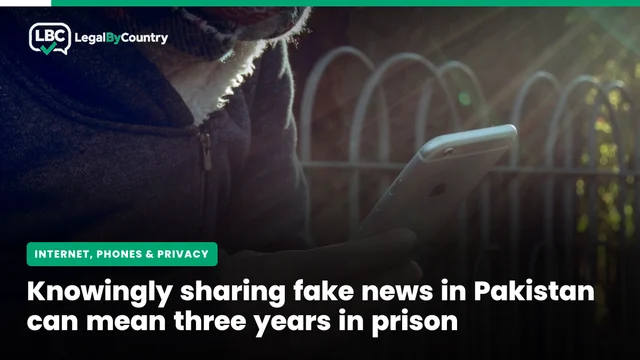
Yes, when you know or have reason to believe it is false. Section 26A of PECA 2016, added in January 2025, punishes spreading false information online that is likely to cause fear, panic or unrest with up to three years in prison.
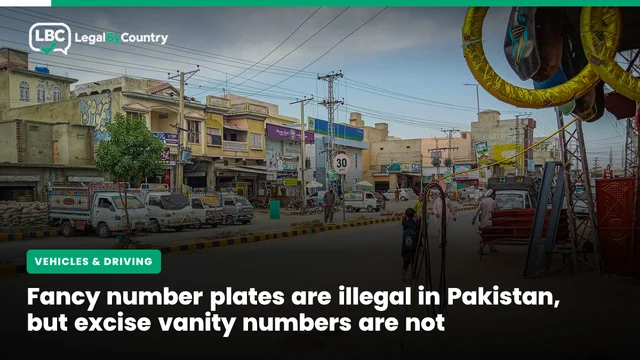
No. Section 23 of the Provincial Motor Vehicles Ordinance, 1965 and rule 32 of the Motor Vehicles Rules, 1969 require a plate showing only the registration mark in the official format. Stylised, foreign-style, covered or missing plates bring fines, demerit points or worse.
Only within limits. The Explosives Act, 1884 treats fireworks as explosives, so making, storing and selling them needs a licence. District section 144 orders often ban sale and use around Shab-e-Barat and New Year, and unlicensed trade can mean 14 years.
Yes. Child marriage is a crime everywhere in Pakistan. Islamabad, Punjab, Sindh and Balochistan set 18 for both sexes and jail the adult groom, parents and organisers for two to three years. Khyber Pakhtunkhwa's 1929 Act still sets 16 for girls.
Only through regulated local channels. Currency futures on PMEX through an SECP-licensed broker are lawful, but the State Bank says residents buying from offshore forex or CFD apps, or sending them money, breaks sections 4(1) and 5(1) of FERA, 1947.
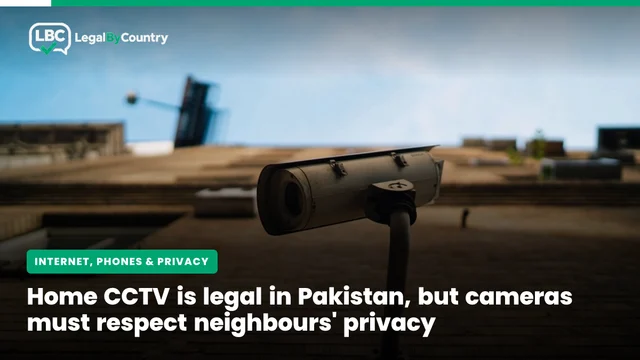
Yes. No Pakistani law bans home CCTV or requires a permit. Article 14 of the Constitution still protects your neighbours' privacy, and PECA 2016 and the Penal Code punish spying, hidden cameras in private rooms and sharing footage to harm or blackmail someone.
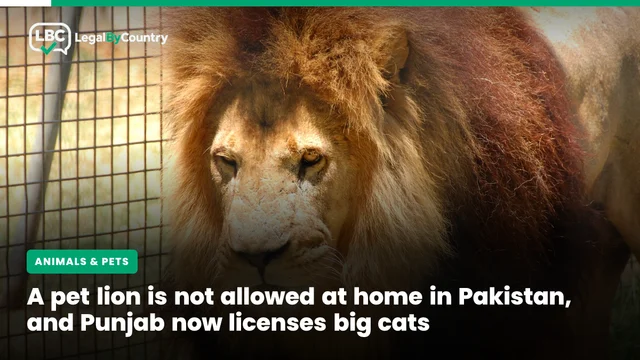
No, not as a house pet. Punjab's Wildlife Act 1974 requires a section 10-B licence for any captive lion and bars big cats from homes. Other provinces demand a possession certificate, and Islamabad's 2023 law bans keeping wild animals in captivity.
It depends. No law requires consent for every photo, but sharing someone's picture without consent to harass or harm them is cyber stalking under PECA section 24, and posting sexual, morphed or falsely captioned images is a more serious crime under sections 21 and 20.
Yes. No Pakistani law stops you working remotely for a foreign employer or client. Receive the money through a bank and pay tax under the Income Tax Ordinance, 2001: 0.25% for PSEB-registered IT exporters, 1% for other services, salary rates for employees.
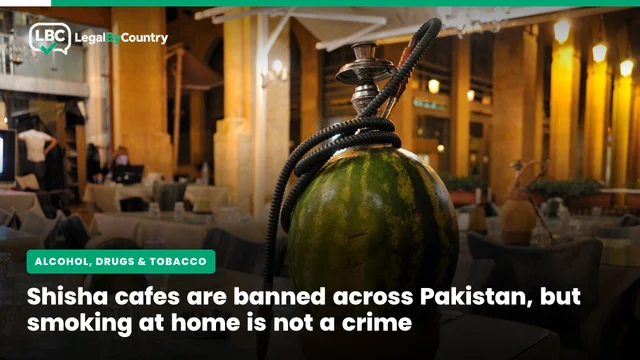
Only in private. Serving shisha in cafes, restaurants and hotels is banned under the Prohibition of Smoking Ordinance, 2002, Supreme Court orders and provincial bans, and Islamabad has shut every shisha cafe. An adult smoking a hookah at home commits no offence.
Not as an instant divorce. Pronouncing triple talaq is not a crime, but section 7 of the Muslim Family Laws Ordinance, 1961 treats it like any talaq: written notice to the Union Council Chairman, then 90 days before it takes effect.
No. Section 6 of the Muslim Family Laws Ordinance, 1961 requires the Arbitration Council's prior written permission. Marrying without it makes the whole dower payable at once and risks up to a year in jail, though courts usually treat the second nikah as valid.
No. Moving money through an unlicensed hundi or hawala dealer breaks sections 4 and 5 of the Foreign Exchange Regulation Act, 1947, punishable with up to five years in prison. Crime-linked transfers can add money laundering charges carrying up to ten years.
Yes, if you buy from an exchange company or bank authorised by the State Bank of Pakistan. Section 4 of the Foreign Exchange Regulation Act, 1947 bars dealing with anyone else, and SBP rules cap purchases at USD 10,000 a day.
Mostly yes. Kitchen knives, work knives and small blades are legal, but the Pakistan Arms Ordinance, 1965 and provincial arms laws treat daggers, swords, flick-knives and knives with blades of four inches or more as arms needing a licence.
Yes, if it is peaceful and unarmed, under Article 16 of the Constitution. But Islamabad's 2024 Act and Punjab's 2026 Act require permission and designated areas, and section 144 orders can ban gatherings anywhere for a set period.
Sharing a home is not itself a crime. Sex between a man and a woman not married to each other is fornication under section 496-B of the Penal Code, punishable by up to five years, and a case can only start through a court complaint.
No. Section 89-A of the Provincial Motor Vehicles Ordinance 1965 says nobody may drive or ride pillion on a motorcycle without a crash helmet. Women and children are not exempt. Fines are Rs 2,000 in Lahore and Rs 5,000 on Karachi e-challans.
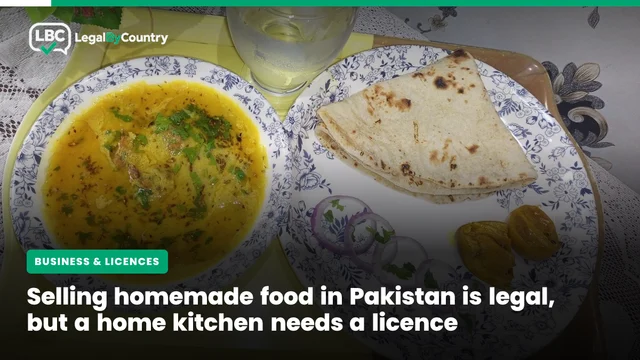
Yes, with a licence. Provincial food laws, such as section 15 of the Punjab Food Authority Act, 2011, ban any food business, profit or not, without registration or a licence. No province has notified an exemption for home kitchens or online sellers.
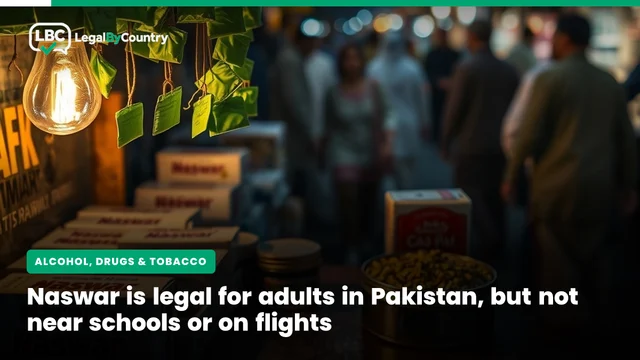
Yes. No law in force bans adults from buying or using naswar. The Prohibition of Smoking Ordinance, 2002 still bars using it in public buildings and transport and selling it within 50 metres of schools, and provincial laws bar selling tobacco to children.
No. The Control of Narcotic Substances Act, 1997 bans growing, possessing, selling and transporting cannabis, including charas and bhang. Only businesses licensed by the Cannabis Control and Regulatory Authority may handle it, for industrial hemp or medical use, never for personal consumption.
Yes. A court marriage is an ordinary nikah between two consenting adults, registered with a licensed Nikah Registrar under section 5 of the Muslim Family Laws Ordinance, 1961. Both must meet their province's minimum age, which is 18 everywhere except Khyber Pakhtunkhwa.
No. Section 3 of the Provincial Motor Vehicles Ordinance, 1965 bans driving in a public place without an effective licence for that vehicle. Only learners meeting strict conditions are excused. Fines now reach Rs 15,000 in Punjab and Rs 50,000 in Sindh.
Yes to own, but not to keep on a local SIM. Section 29 of the Telecom Act requires PTA approval, so an unregistered phone is blocked after 60 days. Register it through DIRBS and pay FBR duty. Tampering with an IMEI is a crime.
Only on notified days. Punjab's Regulation of Kite Flying Act 2025 bans flying, making and selling kites unless a deputy commissioner's notification allows it, as Lahore has for 12 to 14 March 2027. Metal, nylon and sharp maanjha string are never allowed.
No. The 1978 provincial gambling Ordinances and the 1977 Act in Islamabad define gaming to include betting, and no authority licenses betting apps. Betting from home can bring up to five years in prison in Punjab and Khyber Pakhtunkhwa.
Yes, for adults. No federal or provincial law bans buying or using a vape. The Prohibition of Smoking and Protection of Non-smokers Health Ordinance, 2002 still bars sales to under-18s and use in indoor public places, and some provinces add local restrictions.
Only for some people. The Prohibition (Enforcement of Hadd) Order, 1979 bans drinking for Muslims. Non-Muslim foreigners, and non-Muslim citizens for religious ceremonies, may obtain alcohol lawfully, but only through provincially licensed sellers and usually with an excise permit.
Yes, owning, buying and selling crypto for yourself is legal, but it is not legal tender. Under the Virtual Assets Act, 2026, any exchange or crypto service needs a PVARA licence, and running one without a licence is a crime.
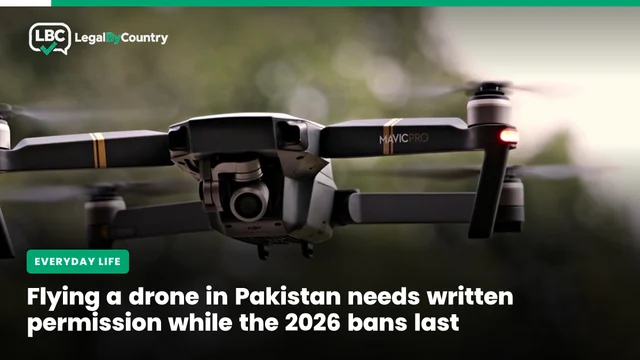
Only in limited cases. Since February 2026, a federal directive and provincial section 144 orders have banned outdoor drone flying without written permission. The Pakistan Civil Aviation Act, 2023 also treats drones as aircraft, requiring registration and allowing seizure.
It depends. No statute bans recording a call you are part of, but PECA 2016 punishes interception with dishonest intention, and the Supreme Court said in 2026 that secret recording for illegal purposes is criminal. Sharing a recording to harm someone is clearly illegal.
Yes. No Pakistani law makes simply using a VPN an offence. PTA expects businesses and freelancers to register work VPNs free on its portal, licenses local VPN providers, and can disrupt unregistered traffic. Crimes committed through a VPN remain punishable under PECA 2016.